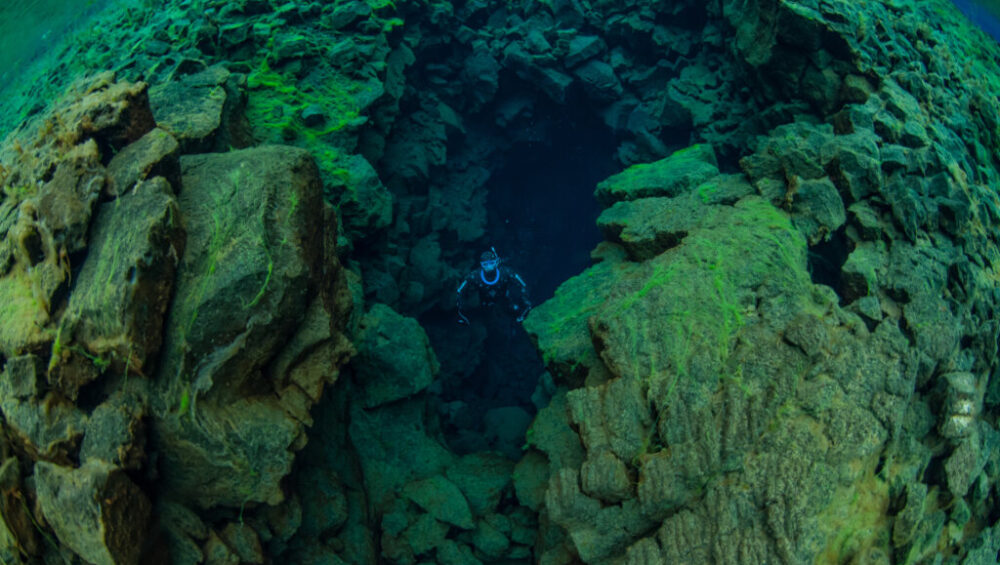
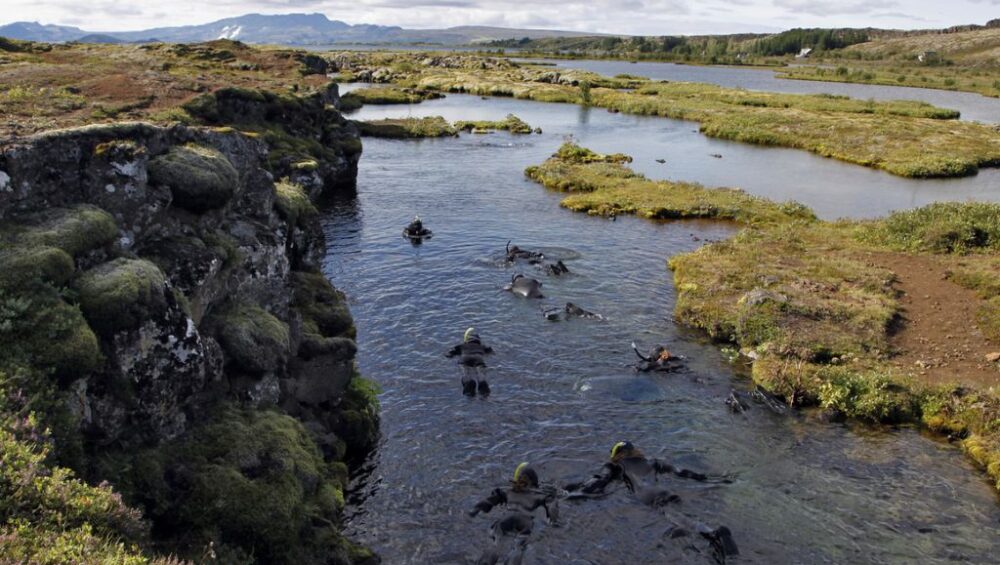
Silfra is cold. There is no point pretending otherwise. The water sits at 2-4°C (35-39°F) all year round — glacial meltwater filtered through volcanic rock for decades, arriving at the fissure pure, clear and very, very cold. But here is the thing that surprises almost every single guest who dives with us: it is nowhere near as bad as it sounds. And the reason for that comes down entirely to what you are wearing.
The Number That Scares People — and Why It Shouldn’t
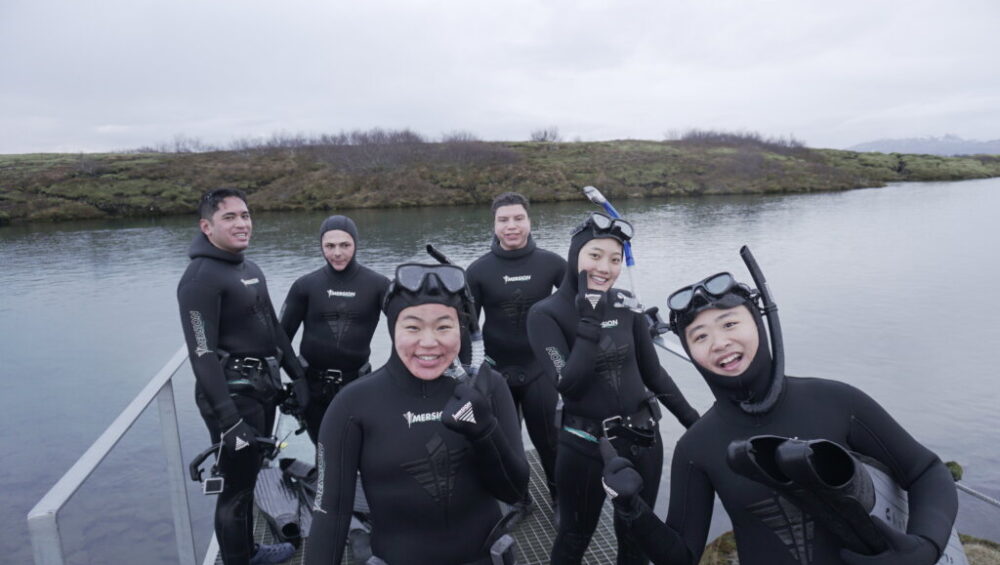
Two degrees Celsius. When people read that, they imagine gasping, shivering, and scrambling to get out after thirty seconds. The reality is completely different. Thousands of people dive Silfra every year — beginners, families, people who claim to hate the cold — and the overwhelming majority stay in the water for 40-60 minutes and emerge buzzing. The secret is not mental toughness. It is the wetsuit.
Why Most People Get Silfra Wrong — The Drysuit Problem
The majority of operators at Silfra put their guests in drysuits. A drysuit is a fully sealed suit that keeps your body completely dry. It sounds like the obvious choice for 2°C water. But there is a fundamental problem with drysuits at Silfra that most operators do not tell you about.
A drysuit works by trapping air inside it to create insulation. That trapped air makes the suit extremely buoyant — so buoyant that you float on the surface and physically cannot dive beneath it. You are essentially wearing a human-shaped balloon. The experience you get in a drysuit is a surface float — you drift along looking down at Silfra from above, like looking through a window. You never actually enter the world below.
And here is the cold paradox: drysuit wearers often get colder faster than wetsuit wearers. Because they are just floating passively on the surface, their bodies are not generating heat. Inactivity in cold water is your enemy. Many drysuit guests exit the water colder than our wetsuit guests, despite being technically drier.
Why Our Wetsuits Are Warmer Than You Think
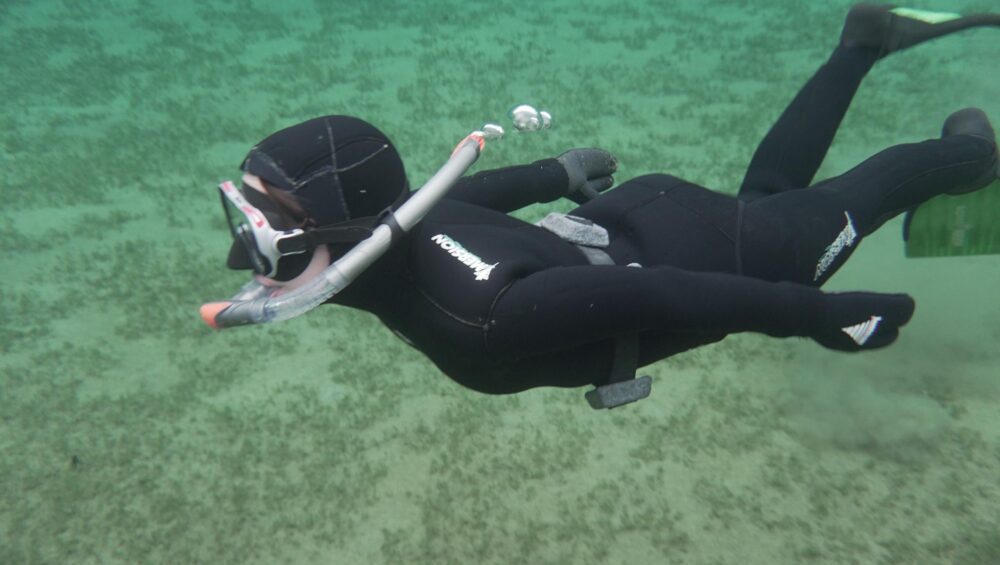
At Freedive Iceland we use specialist 7mm open-cell freediving wetsuits — and these are not ordinary wetsuits. They are nothing like the thin suits you might have worn at a surf school or a snorkel tour in the Mediterranean.
The key is the open-cell interior. Standard wetsuits have a fabric lining on the inside. Open-cell wetsuits do not — the raw neoprene sits directly against your skin and creates a suction-cup effect, forming a tight, personalised seal around your entire body. When you enter the water with lubricant applied, this seal means that water barely enters the suit at all. Your body heats the tiny amount of water that does get in almost immediately, creating a warm layer that stays with you.
The result is that most guests are genuinely surprised by how warm they feel. The cold hits your face when you first enter — that part is real, and it takes a breath or two to adjust. But within a minute your face adapts, your body is warm inside the suit, and you stop thinking about the cold entirely. What replaces it is the view.
The Warmth of Movement
There is another crucial difference between our wetsuit experience and a drysuit tour — movement. In our freediving wetsuits you are not floating passively. You are swimming, duck-diving, exploring the fissure from all angles. That constant movement generates significant body heat, which the open-cell neoprene traps and holds.
The more you move, the warmer you get. Our guests who are most active in the water — diving down to touch the tectonic plates, swimming through the Cathedral, exploring the troll hair algae up close — are almost always the ones who stay in the longest and feel the warmest throughout. Passive floating in a drysuit cannot compete with the warmth of active freediving in a well-fitted wetsuit.
What the Cold Actually Feels Like — Honestly
- When you first enter: A sharp cold on your face and hands. Your body braces. You take a breath.
- After 60 seconds: Your face adjusts. Your body is warm inside the suit. You open your eyes.
- After 5 minutes: You have stopped thinking about the temperature entirely. You are thinking about what you can see.
- After 40 minutes: Most guests do not want to get out.
Tips for Staying Comfortable
- Do not enter the water hungry or tired — a warm, fed body generates more heat
- Keep moving from the moment you enter — do not float passively
- Tell your guide if you feel cold — we can adjust the pace and get you moving again
- Hot drinks are waiting for you the moment you exit — something genuinely worth looking forward to
The Bottom Line
Silfra is cold. But in a properly fitted 7mm open-cell freediving wetsuit, with an experienced guide and small group, it is one of the most comfortable cold water experiences you will find anywhere. The guests who are most nervous about the cold before entering are often the ones most surprised by how manageable — and how completely worth it — it is.
Do not let the temperature put you off. Let it be part of the adventure.